Journey into Kubernetes: Learning, Challenges, and Insights"
Exploring Kubernetes from the ground up, I’m learning its concepts, setting things up, and overcoming challenges along the way. With each step, I gain new insights and refine my understanding. This blog documents my journey, sharing lessons learned and practical takeaways
5/8/20241 min read
DevOps insights shared.
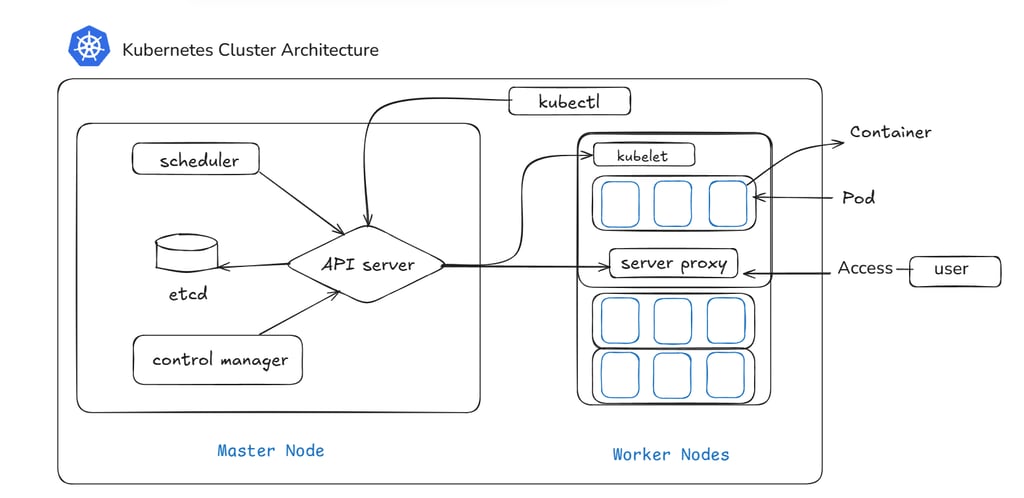
Kubernetes Architecture
Master Node (Control Plane)
Manages the cluster and makes global decisions.
Components:
API Server: Entry point for all Kubernetes commands (kubectl, API calls).
Controller Manager: Ensures desired state (e.g., replica management).
Scheduler: Assigns Pods to nodes based on resource availability.
etcd: Stores cluster configuration and state.
Worker Nodes
Runs application workloads.
Components:
Kubelet: Communicates with the control plane, runs Pods.
Kube Proxy: Manages network communication within the cluster.
Container Runtime: Runs containers (e.g., Docker, containerd).
Pods
The smallest deployable unit in Kubernetes.
Contains one or more containers that share networking and storage.
Networking
Ensures communication between Pods and external access.
Uses CNI (Container Network Interface) plugins like Calico, Flannel.
Storage
Supports different storage types: Persistent Volumes (PV), Persistent Volume Claims (PVC).